

The Writings of Torrénce Brannon-Reese
Meet Torrénce BRANNON-Reese
Originally published in CanvasRebel Magazine, September 2026.
We caught up with the brilliant and insightful Torrénce BRANNON-Reese a few weeks ago and have shared our conversation below.
Torrénce , appreciate you joining us today. We’d love to hear the backstory behind a risk you’ve taken – whether big or small, walk us through what it was like and how it ultimately turned out.
I Came to Los Angeles With $45 and a Dream
One of the greatest risks I ever took began with a one-way flight from New Orleans to Los Angeles.
I didn’t have money. I didn’t have connections. I didn’t have a job waiting for me. What I had was a dream, some youthful courage, and a deep desire to make something of myself—and, ultimately, to contribute something of value to the world.
My journey actually began years earlier.
After being honorably discharged from the United States Air Force, I returned to my hometown of New Orleans. I had served overseas at Clark Air Base in the Philippines, and I had taken on enormous responsibilities at a very young age. I had become a teenage husband and father.
Being that young, serving in the military, being married and trying to raise a family proved to be more than my young wife and I could sustain. As hard as we tried, our marriage eventually dissolved. By then, we had two beautiful daughters.
So there I was—a young father, recently out of the military, trying to figure out what came next.
My objectives were pretty simple: work hard, take care of my children, make some money, get an education, and somehow pursue my dream of singing and entertaining.
I had a lot on my plate.
I worked wherever I could. I took jobs at hotels and restaurants during the day and worked another job overnight at the local A&P Market.
Then music entered the picture in a serious way.
One day, while walking through the Magnolia Projects on my way to my former mother-in-law’s home, I met some fellows who could sing. We started harmonizing on street corners—straight-up a cappella, the old-fashioned way.
We “got tight,” as we used to say.
Since all of us came from Uptown New Orleans, we called ourselves The Sensational Uptowners. I was honored to become the group’s lead singer.
Those street-corner harmonies eventually took us onto real stages. We began performing regularly and had opportunities to open for legendary New Orleans artists including Fats Domino, Ernie K-Doe, The Dixie Cups, Chocolate Milk and The Neville Brothers, as well as nationally known artists such as the great Bobby Womack.
I could see the possibilities.
But I could also see the limitations.
Like many young vocal groups, we went through our share of ups and downs—little money, members quitting, people getting into trouble, jobs coming and going, and the everyday pressures of trying to survive.
I even lost one good job over something as ridiculous as eating crawfish!
Eventually, I began asking myself a serious question:
Was I going to stay where I was comfortable, or risk everything for the possibility of becoming the man I believed I could be?
Around that time, I had an opportunity to speak with one of my singing idols, Gerald Alston, lead singer of the legendary Manhattans. After listening to some of my original songs, Gerald suggested that I consider moving to either Nashville or Los Angeles.
I chose Los Angeles.
My mother arranged for me to stay with some distant relatives there. I figured that would at least give me a place to land while I found work and got myself established.
Except there was one problem.
When I stepped off the plane, my relatives promptly informed me that they didn’t have room for me.
There I was.
Los Angeles, California.
$45 in my pocket.
No job.
No friends.
No professional contacts.
And now, no place to live.
Just a dream.
I also had something else: a stubborn belief that somehow things were going to get better if I refused to quit.
The first weeks tested that belief.
I was dealing with a mysterious dizziness that seemed to come out of nowhere. I slept wherever I could—donut shops, coffeehouses, abandoned apartments, anywhere I could find relative safety for a few hours.
But every morning, I got up.
I found someplace to shower. I shaved. I cleaned myself up.
And then I went looking for opportunity.
By my second week in Los Angeles, I found a job at Warehouse Records in Torrance, California.
That job wasn’t the fulfillment of my dream.
But it was a foothold.
And sometimes a foothold is all you need.
I enrolled at Los Angeles Southwest College. By my second year, my fellow students elected me Student Government President. I earned my Associate of Arts degree in Music, with a minor in Political Science, and eventually transferred to California State University, Dominguez Hills.
Education began expanding my dream.
I realized that perhaps I hadn’t come to Los Angeles simply to become an entertainer.
Perhaps I had come here to become a servant-leader.
In 1992, after graduating, I founded my nonprofit organization, FA-MLI, Inc., combining my love of music, culture, education, young people and community empowerment.
More than three decades later, I can look back at that young man who stepped off an airplane with $45 in his pocket and barely recognize the life that was waiting for him.
I’ve established myself as a professional artist and performer whose work has traveled internationally. I’ve become an educator, cultural preservationist and community activist. I’ve created and led youth mentoring initiatives that have touched the lives of generations of young people.
And one of the most extraordinary chapters of my journey came after decades of advocacy: helping lead the successful effort to establish the Malcolm X Corridor, the historic co-naming of approximately five miles of world-famous Crenshaw Boulevard in Los Angeles.
Yet none of those things existed when I stepped off that airplane.
There was no nonprofit.
No degree.
No organization.
No international performances.
No Malcolm X Corridor.
There was only $45 and a dream.
Los Angeles has always attracted people who arrive believing they will make it in entertainment. Many discover just how unforgiving that dream can be. Careers stall. Money disappears. People change directions. Some eventually pack their belongings and go back home.
I understand why.
There were certainly moments when going home would have been easier for me, too.
But somewhere inside that frightened young man sleeping in donut shops was the belief that success didn’t necessarily mean becoming famous. Maybe success meant becoming useful. Maybe my music could open one door, education another, activism another, and service to others yet another.
Today, I am also the proud father of four beautiful daughters.
And perhaps one of the greatest rewards of surviving that journey is being able to share the story with them when they encounter their own mountains.
I tell them that courage isn’t the absence of fear.
Sometimes courage is being afraid, uncertain and completely unprepared—and moving forward anyway.
My gamble paid off.
Not because everything went according to plan.
Almost nothing did.
It paid off because I stayed in the game long enough to discover that the dream I came to Los Angeles chasing was actually much bigger than the one I had imagined.
And it all started with $45, no place to sleep, and enough faith in myself to try.
Torrénce , before we move on to more of these sorts of questions, can you take some time to bring our readers up to speed on you and what you do?
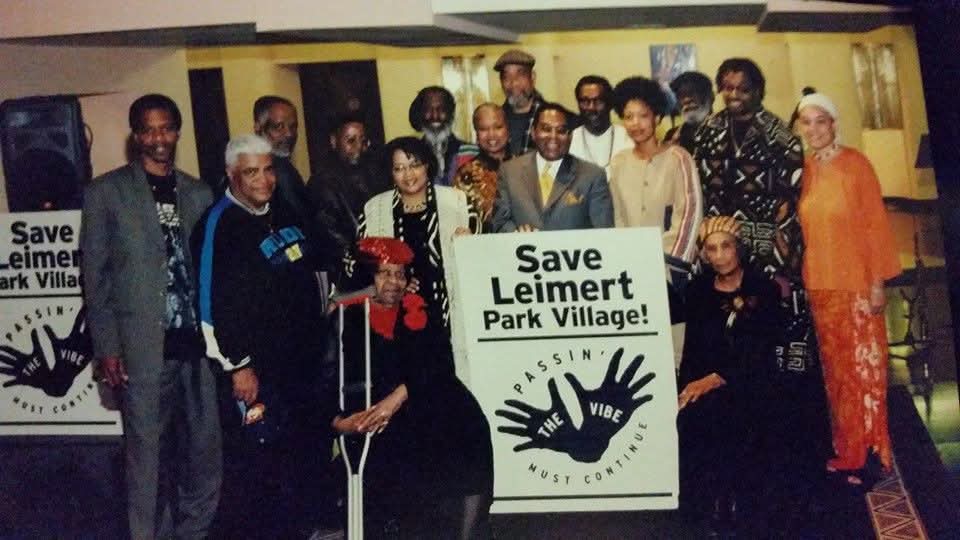
I describe myself as an “Architect of Da Renaissance” because, for more than three decades, my life’s work has existed at the intersection of music, arts, education, culture, social justice, youth development and community building, especially in Leimert Black Arts Village.
I am Torrénce BRANNON-Reese, MSW—a New Orleans native, United States Air Force veteran, recording and performing artist, singer, songwriter, educator, cultural preservationist, activist, youth mentor, producer, and Founder & CEO of FA-MLI, Inc. — the Foundation for Arts, Mentoring, Leadership & Innovation, which I established in 1992.
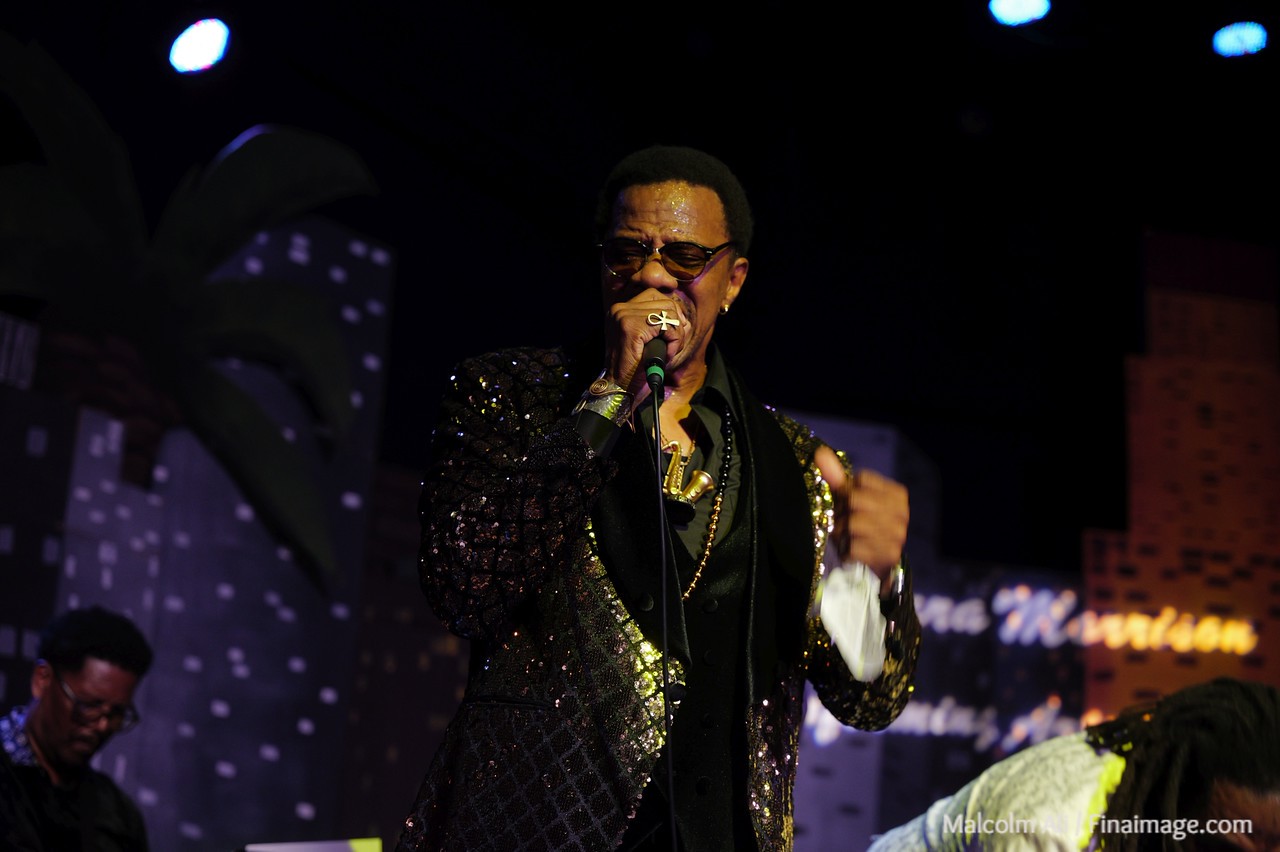
As an artist, I’ve had the blessing of performing with and alongside some extraordinary people. I’ve sung with The Delfonics, co-founded and performed with the acclaimed doo-wop ensemble Street Corner Renaissance, and today lead Torrénce BRANNON & Everything with Soul and my Uptown New Orleans Brass Band. My musical foundation is rooted in New Orleans, but encompasses Soul, R&B, Jazz, Blues, Funk, Gospel and the broader African American musical tradition.
My philosophy is simple: Everything with Soul.
But I’ve never viewed art as separate from community. I believe we can entertain people and educate them; make people dance and make them think; celebrate our culture while using that culture to address real human needs.
That’s the philosophy behind FA-MLI.
For more than 30 years, our organization has created culturally relevant programs that use mentoring, arts, education, history and leadership development to empower young people and strengthen communities.
One of our signature initiatives is See a Man Be a Man — Life Mastery, Mentoring & Leadership Development, which engages young men around education, health and wellness, culture and identity, economics, career development, family responsibility, civic engagement, spirituality and personal responsibility. We don’t simply tell boys to “be men.” We challenge them to determine what kind of men they want to become, and then help provide the knowledge, planning tools, mentorship and opportunities to move toward that vision.
Our work also includes A Question of Culture, an ongoing Film & Discussion Forum addressing history, politics, race, economics, human rights, family, education and contemporary culture; the I’ve Known Rivers Film Festival of Arts, Culture & Music; Legendary Nights — Music, Education & Culture; Music Saved My Life; and cultural and educational experiences such as our Da Soul of America New Orleans Tour.
I’m particularly interested in the intersection of music, neuroscience and healing. I earned my Master of Social Work degree from the University of Southern California and have participated in neuroscience-related fellowship work through UCLA/Charles R. Drew University exploring music’s relationship to the brain, body and human spirit. I’m fascinated by what many of us as artists have always intuitively understood: music can heal, regulate, connect, awaken memory and transform human experience.
One of the accomplishments I’m most proud of is the Malcolm X Corridor.
After approximately three decades of advocacy, organizing and persistence, our movement helped secure the historic honorary co-naming of approximately five miles of Crenshaw Boulevard “In Honor of Malcolm X.” For me, those signs are more than street markers. They are cultural classrooms. A young person sees Malcolm’s name and asks, “Who was Malcolm X, and why is his name here?” That question creates an opportunity to teach history.
If I had to identify the central problem my work seeks to address,
I would call it disconnection—young people disconnected from history and opportunity; communities disconnected from their cultural power; artists disconnected from sustainable opportunities; and generations disconnected from one another.
My work is about building those bridges.
I use music to connect generations, mentoring to connect young people with possibility, history to connect people with identity, and education to connect knowledge with action.
That’s also what I believe distinguishes my brand. I don’t separate the artist from the educator, the entrepreneur from the activist, or culture from community development. They are interconnected parts of the same mission.
And while I’m proud of the stages I’ve performed on, the programs I’ve created, and the Malcolm X Corridor, I’m most proud of people—young people I’ve watched grow into responsible adults, artists whose work we’ve helped elevate, elders whose stories we’ve preserved, and communities we’ve brought together.
At this stage of my life, I’m thinking increasingly about legacy and institution-building. Through our developing Architects of Da Renaissance vision, I want to build a significant philanthropic endowment capable of supporting artists, educators, young people and underserved communities for generations to come.
My brand is Everything with Soul.
My method is Knowledge, Plan and Action.
And my mission is ultimately about transforming lives, preserving culture, developing leaders and building something that will remain long after we’re gone.
In your view, what can society to do to best support artists, creatives and a thriving creative ecosystem?
They can adopt and or support my initiative, the Artists Bill of Rights..
THE ARTISTS’ BILL OF RIGHTS & RESPONSIBILITIES
A Nine-Point Strategic Plan for Cultural, Economic & Human Security
From R.E.S.P.E.C.T. to Reconstruction
SPIRITUALITY — Respect the Spirit Behind the Art
Artists have the right to dignity, freedom of belief and respect for their humanity—not simply their value as entertainment.
CULTURE — Protect the Keepers of the Legacy
Identify, document, employ and celebrate elder and working artists and cultural institutions. Create paid residencies, master classes, oral histories and intergenerational mentorships. Don’t wait until the funeral to give the artist their flowers.
CAREER — Turn Talent Into Sustainable Careers
Treat being an artist as a profession. Develop career plans and create employment pathways as performers, teachers, producers, composers, mentors, technicians, curators, arts administrators and entrepreneurs.
EDUCATION — Teach the Business of Art
Artists should understand contracts, copyrights, publishing, royalties, licensing, intellectual property, trademarks, streaming, taxes, accounting, negotiation, marketing, AI/likeness rights and estate planning—and have access to qualified professional guidance. Never sign what you don’t understand.
ECONOMICS — Put Artists to Work: $5 Million Every Year
Artists deserve consistent employment, fair compensation and economic security. Establish a minimum $5 million annual Artists Performance & Cultural Investment Fund, while requiring written contracts, deposits, clear cancellation provisions and timely professional payment.
POLITICS — Give Artists a Seat at the Table
Artists and cultural workers must participate in decisions involving cultural policy, public arts funding, redevelopment, zoning, education and the communities in which they create. If decisions affect artists, artists must be in the room.
HEALTH — Music Saved My Life: Heal the Healers
Connect artists—particularly elders and gig workers—with physical, mental, dental, vision, hearing, nutrition and wellness resources. The people whose art helped heal us deserve to be healed too.
FAMILY — Protect the People Behind the Artist
Artists are also mothers, fathers, grandparents, spouses, partners, sons and daughters. Economic instability affects entire families. Artists need financial planning, insurance education, estate planning, retirement preparation and family-stabilization resources.
PERSONAL RESPONSIBILITY — Artists Must Invest in Themselves & Each Other
Rights and responsibilities must walk together. Artists should develop business and life plans, maintain professional records, protect intellectual property, prepare for retirement, honor contracts, mentor others and reinvest in their communities. Don’t only demand that somebody invest in you. Learn to invest in yourself—and collectively in one another.
The larger vision calls for $5 million annually in direct cultural investment, including $3 million in artist performance fees, $750,000 for elder and legacy artists, $500,000 for emerging and youth artists, $500,000 to support community cultural venues in hiring artists, and $250,000 for new works and cultural innovation.
And the philosophy underneath all nine points remains:
ORGANIZE. EDUCATE. OWN. PROTECT. INVEST.
R.E.S.P.E.C.T. cannot simply be something we sing about. It must become something we build.
Is there a particular goal or mission driving your creative journey?
Yes. One of my central goals is the establishment or funding of an initial, twenty-five million dollar endowment fund, that grows to 250 million dollars.
The goal or mission of this endowment will help support my community, IE; Support deserving youth, elder and regular folks, in need of housing, aims for their businesses, opportunities to perform for artists and musicians, And much more..
Contact Info:
- Website: https://www.famlisoul.org
- Instagram: @torrencebrannonreese
- Facebook: @TorrenceBrannon
- Youtube: @TorrenceBrannon1960
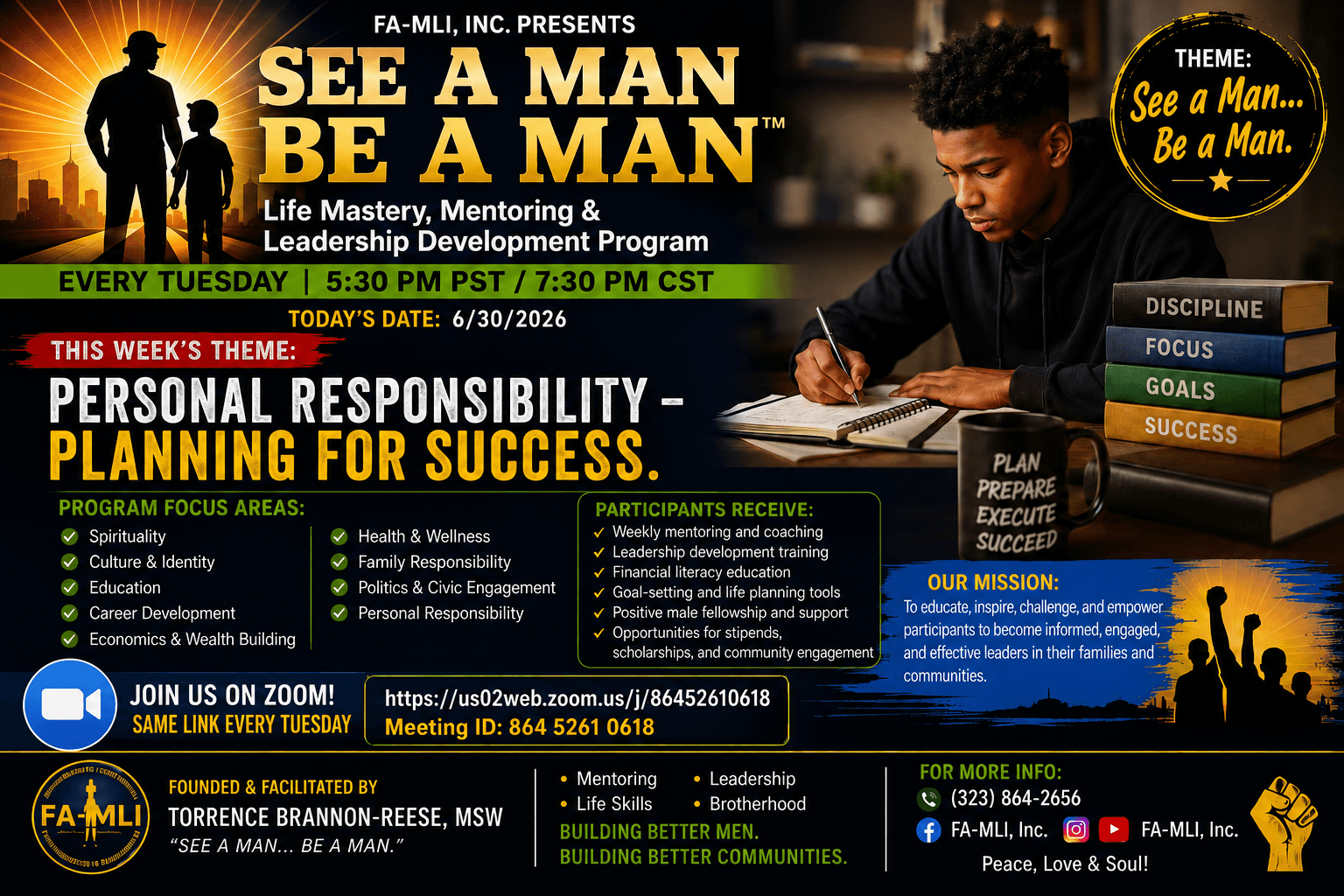
Image Credits
Malcolm Ali